
Choosing the right flour can make or break a pound cake. If you've ever wondered whether you should use cake flour or all-purpose flour when baking pound cakes, you're not alone. Both flours work - but they produce very different results. In this post, I'm breaking down the differences between Cake Flour and All-Purpose Flour, how each one affects pound cake texture, and how to choose the right option for the results you want every time.
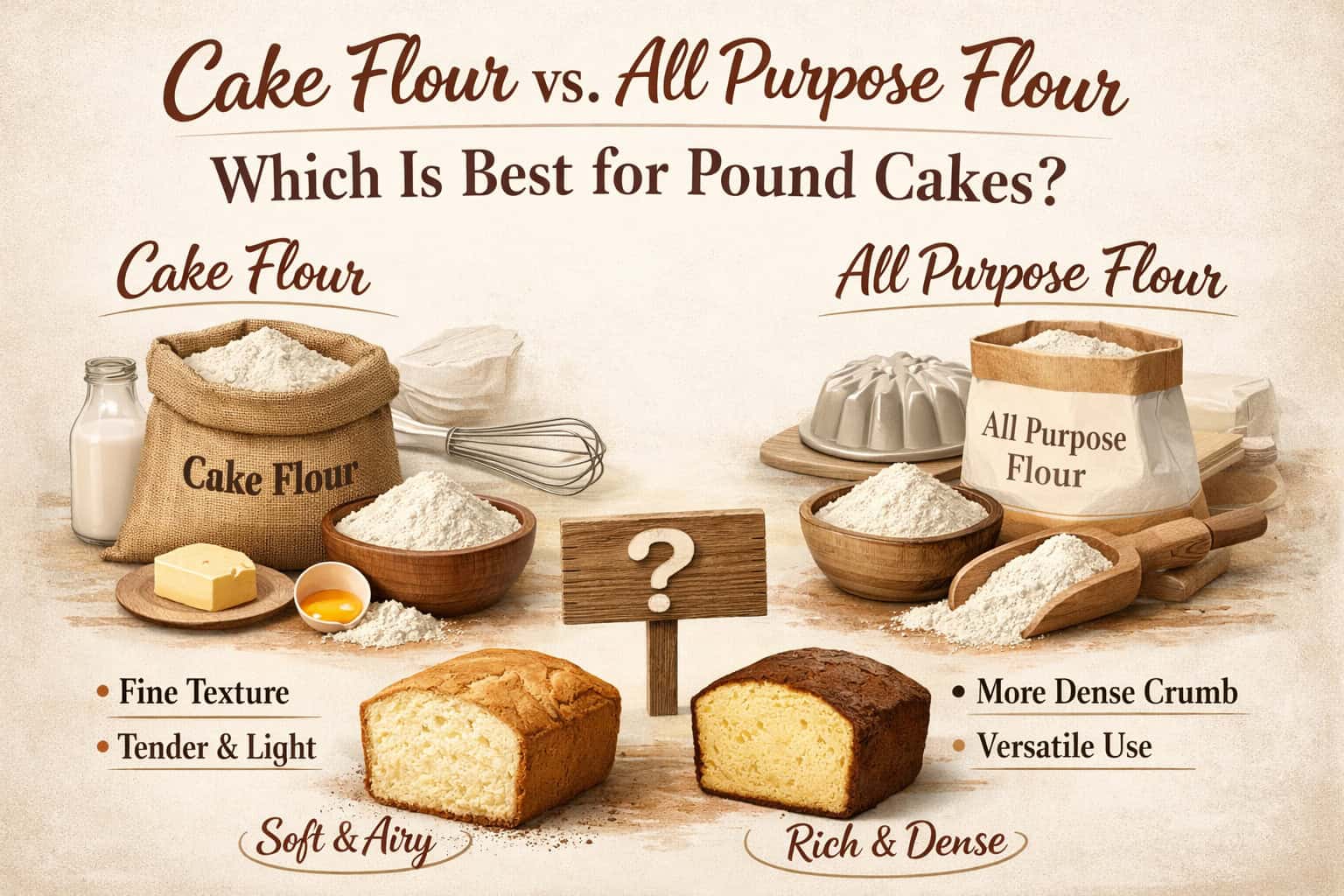
Why Flour Choice Matters in Pound Cakes
Pound cakes are known for their rich, dense yet tender crumb. Unlike lighter cakes that rely heavily on leavening, pound cakes depend on proper ingredient balance and structure. Flour plays a major role in:
- Crumb texture
- Moisture retention
- Cake height
- Overall tenderness
What Is Cake Flour?
Cake flour is a finely milled flour made from soft wheat. It has a lower protein content (typically around 7-9%), which means it forms less gluten when mixed.
How Cake Flour Affects Pound Cakes
- Produces a lighter, more tender crumb.
- Creates a smoother, finer texture.
- Ideal when wanting to achieve a pound cake with a soft, delicate crumb.
Cake flour is often used when you want a pound cake that feels velvety and light.
What Is All-Purpose Flour?
All-purpose flour is exactly what the name implies - versatile and widely used. It has a moderate protein content (about 10-12%), which creates more gluten during mixing.
How All-Purpose Flour Affects Pound Cakes
- Produces a slightly denser crumb.
- Adds structure and stability.
- Holds up well to rich ingredients like butter, sour cream, or cream cheese.
- Ideal for pound cakes that need strength and height.
Many traditional pound cake recipes use all-purpose flour for a reason - it provides reliable structure and consistency.
Cake Flour vs. All-Purpose Flour: Key Differences
| Feature | Cake Flour | All-Purpose Flour |
|---|---|---|
| Protein Content | Low | Moderate |
| Texture | Fine, soft | Slightly coarser |
| Crumb Result | Light, tender | Dense, sturdy |
| Structure | Delicate | Strong |
| Best For | Soft pound cakes | Rich, hearty pound cakes |
Which Flour Is Best for Pound Cakes?
The answer depends on the type of pound cake you're baking and the texture you desire.
Choose Cake Flour If:
- You want a lighter, softer crumb.
- Your pound cake is butter-based and not overly heavy.
- You prefer a classic, melt-in-your-mouth texture.
- The recipe specifically calls for cake flour.
Choose All-Purpose Flour If:
- You want a batter that is thick and rich.
- You want a sturdy, clean slice that holds its shape.
- You prefer a dense pound cake.
- The recipe specifically calls for all purpose flour.
Neither option is "wrong" - it's about matching the flour to the recipe and your preference.
Can You Substitute One for the Other?
Yes - but substitutions should be done carefully.
Best practice: Always follow the flour listed in the recipe for the most consistent results.
If you want try something a little different and want the best of both words, use half cake flour, half all purpose flour.
Frequently asked Questions
Does Flour Choice Affect Pound Cake Moisture?
Indirectly, yes. Cake flour's lower protein helps reduce gluten formation, which can make the cake feel softer and more moist. All-purpose flour creates more structure, which can sometimes feel drier if the cake is overbaked. This is why proper mixing, pan size, and bake time matter just as much as flour choice.
Is Cake Flour better than All-Purpose Flour for pound cake?
Cake flour isn't better - it's different. It creates a softer crumb, while all-purpose flour provides more structure.
Should I sift my flour for pound cake?
Yes. Sifting your flour flour helps aerate it and ensures accurate measuring, which improves texture. Cake flour doesn't necessarily need sifting, but sifting can create a lighter crumb nevertheless.
When it comes to cake flour vs. all-purpose flour for pound cakes, there's no one-size-fits-all answer. Cake flour gives you tenderness and a delicate crumb, while all-purpose flour delivers structure and stability. The key is understanding how each flour behaves and choosing the one that best supports your recipe. And ultimately, it comes down to preference which can only be determined through trial and error.
Once you master flour choice, you'll notice a real difference in the texture, height, and overall quality of your pound cakes - and that confidence shows in every slice. 🧈🍰
Find all of my pound cake recipes here
Find more of my baking guides here
Tools I Use & Recommend
These are the exact tools I use to get consistent, bakery-quality pound cakes every time. Using the right equipment makes a BIG difference-especially when it comes to texture, bake time, and getting that perfect release.
- 12 cup Bundt Pan (Standard size pan for most pound cake recipes)
- 18 cup Bundt Pan (Needed for Mile High Pound Cake recipes)
- Stand Mixer or Hand Mixer
- Silicone Spatula
- Oven Thermometer
- Cake Keeper
- Measuring Cups and Measuring Spoons
👉🏾 Shop all my favorite baking tools here
Enjoyed this post? Pin the photo below and save it for later 😊
Join my Whip it like Butter Community!!
This community is a place to share pound cakes, ask baking questions, swap tips, get inspiration, and help each other become more confident bakers.
Beverly Crowley says
Hello
When you’re sifting flour AP or cake flour; you measure the flour when placing it into sifter just say 3 cups; after you sift and measure again your 3 cups there is always extra flour. Do you use this flour or disregard?
Ashley Frederick says
If there is extra flour, then yes you can disregard it.
Sheri Graves says
Thanks for this info. I just researched this just last week after years of just using WLAPF. That's all my mom used and what she taught me to use as well. But using the cake flour has been a game changer for my mini cakes with glazes and frosting. Blessings to you and thanks again.
Ashley Frederick says
You're very welcome Sheri!