
Learn how thick pound cake glaze should be for the perfect finish, plus how to tell when your glaze is too thin, too thick, or just right.
A homemade glaze can take a pound cake from delicious to unforgettable-but only if it's the right consistency. If your glaze is too thin, it will soak into the cake or run right off the sides. If it's too thick, it won't spread evenly and can leave clumps or a chalky finish.
So, how thick should pound cake glaze be?
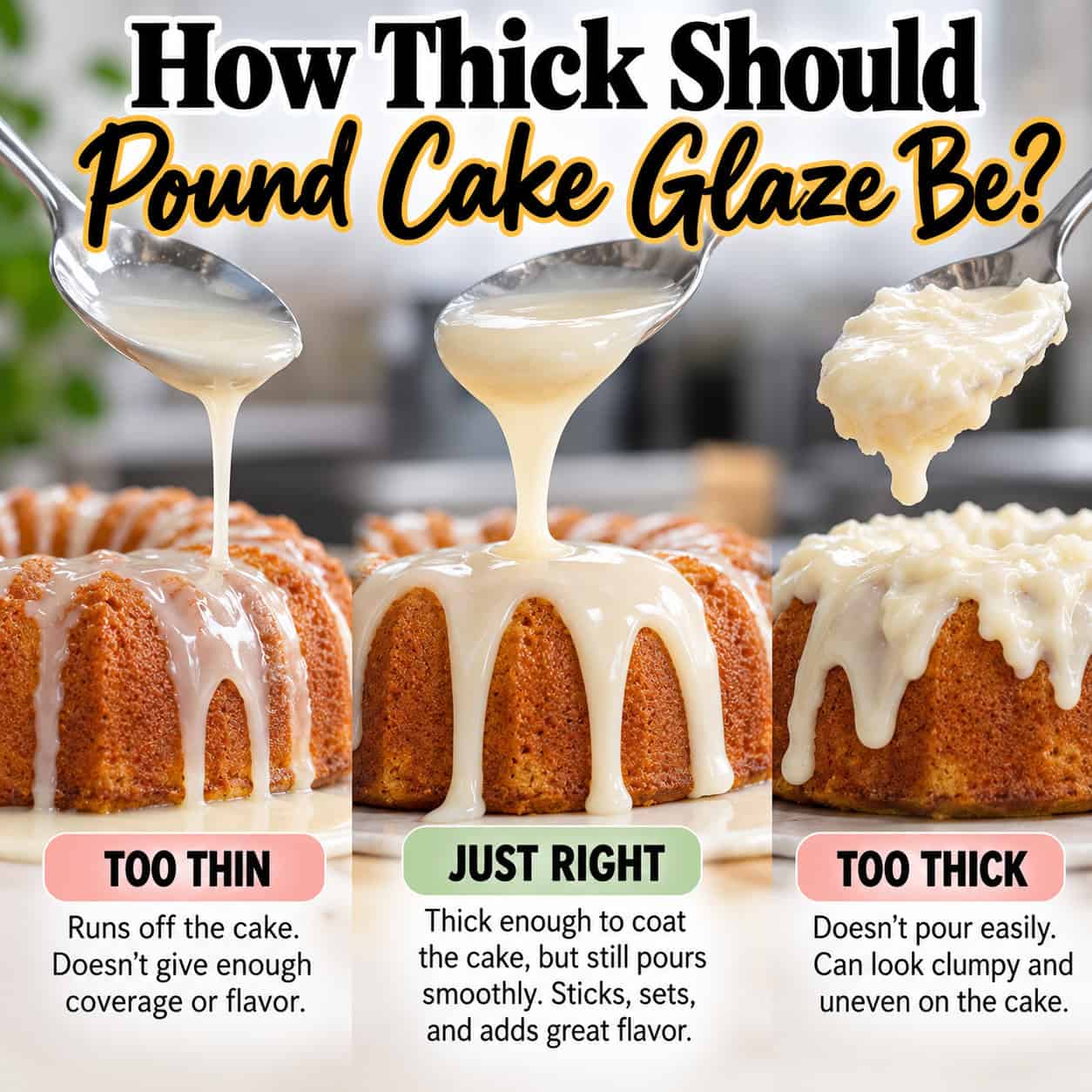
The ideal glaze should be thick enough to coat the cake beautifully but thin enough to flow slowly over the edges. It should create elegant drips that hold their shape instead of disappearing into the cake.
Here's how to achieve the perfect consistency every time.
What Is the Ideal Glaze Consistency?
Think of your glaze as somewhere between heavy cream and honey.
It should:
- Pour easily from a spoon or measuring cup
- Coat the back of a spoon
- Flow gradually over the cake without being watery
When poured over a cooled pound cake, the glaze should create smooth drips that stay in place rather than running straight to the serving plate.
The Spoon Test
One of the easiest ways to check your glaze is with a spoon.
Dip a spoon into the glaze and lift it out.
A properly mixed glaze should:
- Coat the spoon evenly
- Fall in a slow ribbon
If it pours like water, it's too thin.
If it barely moves, it's too thick.
What Happens If the Glaze Is Too Thin?
Thin glaze is one of the most common problems bakers encounter.
When glaze is too runny, it can:
- Soak into the cake instead of sitting on top
- Run completely off the sides
- Pool around the base of the cake
- Leave only a light coating after it sets
This often happens when too much milk, cream, lemon juice, or other liquid is added.
How to Fix Thin Glaze
Fortunately, it's an easy fix.
Simply whisk in a little more powdered sugar, a few tablespoons at a time, until the glaze reaches the desired consistency.
Allow it to rest for a minute or two before checking again. The glaze will thicken as it sits.
What Happens If the Glaze Is Too Thick?
A glaze that's too thick can be just as frustrating.
It may:
- Appear clumpy
- Refuse to drip down the sides
- Create an uneven finish
- Be difficult to pour smoothly
Although some bakers prefer a thicker glaze, an overly thick glaze will not create a great appearance and will sit awkwardly over the cake.
How to Fix Thick Glaze
Add liquid gradually-about 1 tablespoon at a time.
You can use:
- Milk
- Heavy cream
- Lemon juice
Whisk thoroughly after each addition until the glaze pours smoothly. A hand mixer or stand mixer can be used to prepare your glaze as well.
Should the Liquid for Pound Cake Glaze Be at Room Temperature?
Not necessarily.
While room-temperature liquid can blend easily into a glaze, I don't consider it a requirement. I've used cooler liquids plenty of times without a problem.
What matters more is how the glaze looks and pours once everything is combined. If it's too thick, add a little more liquid. If it's too thin, add more powdered sugar.
So instead of worrying too much about the temperature of the liquid, focus on getting the glaze to a smooth, pourable consistency that coats the cake the way you want it to.
The Cake Should Be Completely Cool
No matter how perfect your glaze is, it won't perform well if the cake is warm.
A warm cake causes the glaze to thin and soak into the surface instead of forming a beautiful coating.
Always allow your pound cake to cool completely before glazing, unless you intentionally want a thinner glaze or want the glaze to soak into the cake.
Adjusting Glaze for Different Looks
The consistency you choose can also depend on the look you're trying to achieve.
Thin Drizzle
A slightly thinner glaze works well if you want:
- To just add a light drizzle
- Decorative lines
- A subtle finish
Classic Bundt Cake Finish
For most pound cakes, choose a medium-thick glaze that:
- Flows slowly
- Creates elegant drips
- Covers the top evenly
This is the consistency you'll often see in bakery-style Bundt cakes.
Thick Bakery-Style Coating
If you want a bold white glaze that stands out, make the glaze slightly thicker.
It should still pour, but much more slowly.
This creates a thicker coating that sets into a soft, opaque finish.
Can You Add a Second Layer?
Absolutely.
If you want a thicker glaze without making the mixture overly thick, let the first layer set for about 10 to 15 minutes. Then drizzle a second layer over the cake. This creates beautiful depth while maintaining smooth, even coverage.
Frequently Asked Questions
Should pound cake glaze be runny?
No. It should flow slowly, not pour like water. A glaze that's too thin either won't stay on the cake or will soak into the cake, leaving a poor appearance.
Why won't my glaze drip down the sides?
Your glaze is probably too thick. Add a tablespoon of liquid at a time, mixing at a moderate pace until it begins to flow naturally.
Why does my glaze disappear into the cake?
This usually happens because:
- The cake was still warm.
- The glaze was too thin.
- Too much liquid was added to the glaze.
Can I make glaze ahead of time?
Yes.
Store it in an airtight container in the refrigerator for 3-4 days.
Before using, allow it to come to room temperature, stir well, and adjust the consistency with a small amount of liquid if needed.
In Conclusion....
The perfect pound cake glaze isn't too thin or too thick-it's just right.
Aim for a glaze that:
- Coats the back of a spoon
- Falls in a slow ribbon
- Flows gently over the cake
- Creates beautiful drips without running off completely
If the consistency isn't quite right, don't worry. A little extra powdered sugar or a tablespoon of liquid is usually all it takes to make the adjustment.
Once you've mastered the ideal glaze consistency, you'll be able to give every pound cake a smooth, bakery-style finish that's as beautiful as it is delicious.
Find all of my recipes here
Find all of my baking guides here
Tools I Use & Recommend
These are the exact tools I use to get consistent, bakery-quality pound cakes every time. Using the right equipment makes a BIG difference-especially when it comes to texture, bake time, and getting that perfect release.
- 12-cup Bundt Pan (Standard size pan for most pound cake recipes)
- 18-cup Bundt Pan (Needed for Mile High Pound Cake recipes)
- Stand Mixer or Hand Mixer
- Silicone Spatula
- Oven Thermometer
- Cake Keeper
- Measuring Cups and Measuring Spoons
👉🏾 "Shop all my favorite baking tools here
Enjoyed this post? Pin the photo below and save it for later 😊
Join my Whip it like Butter Community!!
This community is a place to share pound cakes, ask baking questions, swap tips, get inspiration, and help each other become more confident bakers.
https://community.raptive.com/whipitlikebutter?u=whipitlikebutter
Leave a Reply