
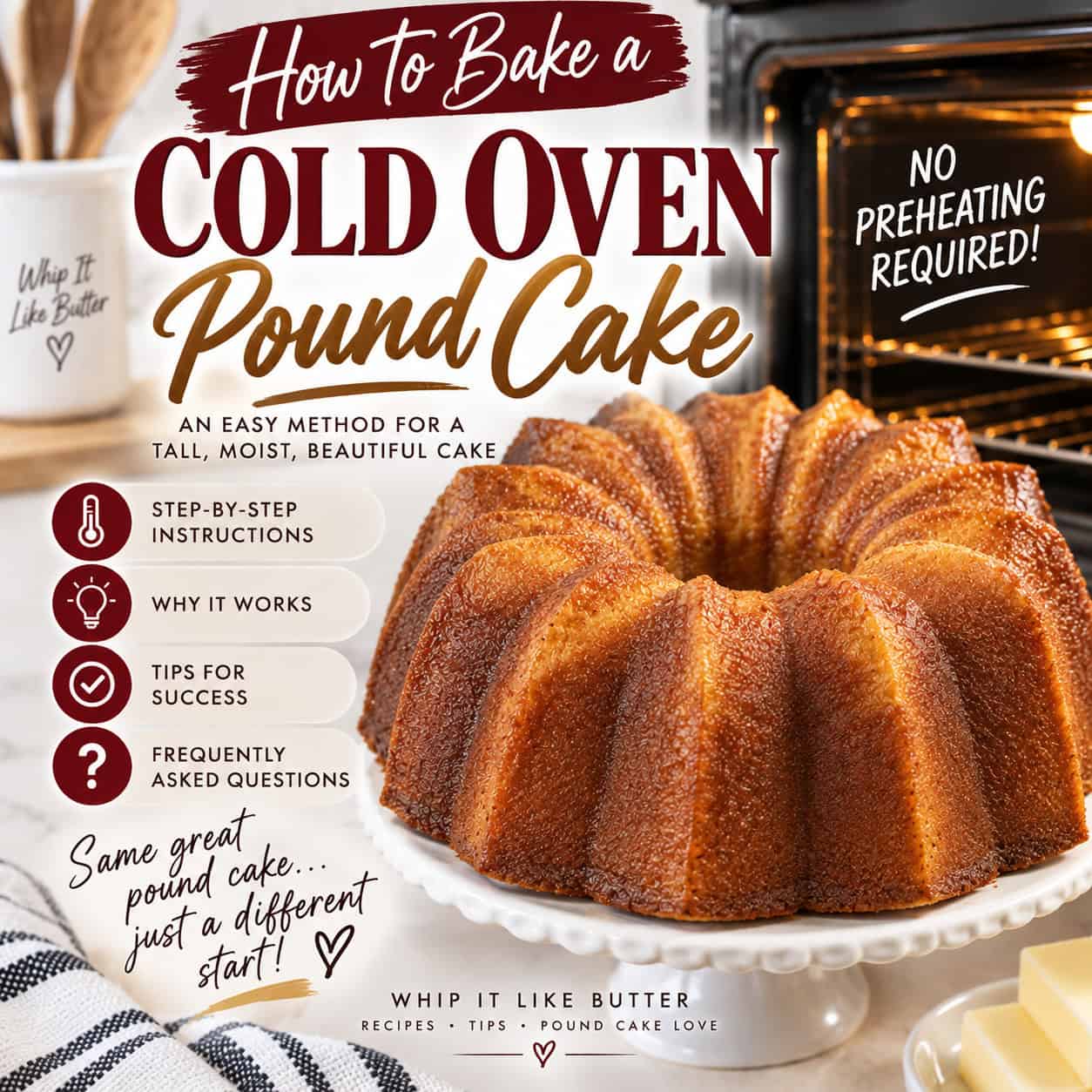
Learn how to bake a Cold Oven Pound Cake, why this old-fashioned baking method works, and tips for achieving a tall, moist, delicious cake.
If you've been baking for any length of time, you've probably heard the same advice over and over: Always preheat your oven before baking a cake.
But there's a pound cake technique that does the exact opposite....
It's called the Cold Oven Method, and instead of preheating your oven, you place the pound cake into a cold oven, turn the oven on, and allow the cake and oven to heat up together.
It may sound strange, but cold oven pound cakes have been baked this way for generations. The gradual increase in temperature can give the batter more time to rise before the outside of the cake sets.
If you've never tried the method before, here's how it works and what you should know before baking your first cold oven pound cake.
What Is a Cold Oven Pound Cake?
A cold oven pound cake is simply a pound cake that begins baking in an unheated oven.
With most pound cake recipes, you preheat the oven to the required temperature before putting the cake inside. With the cold oven method, you prepare your batter, add it to your prepared Bundt pan, place the pan in the cold oven, and then turn the oven on.
The cake gradually heats as the oven comes up to temperature. This isn't a special type of pound cake batter. The term cold oven pound cake refers to the baking method, not necessarily a particular flavor or recipe.
Why Start a Pound Cake in a Cold Oven?
When a pound cake is placed into a fully preheated oven, the outside of the cake begins setting fairly quickly. Starting with a cold oven creates a slower heating period.
During that gradual warm-up, the butter begins melting, air incorporated during creaming expands, eggs provide structure, and any chemical leavening in the recipe begins working as the temperature rises.
The idea is to give the dense batter additional time to expand before the cake's structure becomes completely set.
Depending on the recipe and oven, this can contribute to a tall pound cake with a tender interior and a nicely developed crust.
The cold oven method isn't automatically better than baking in a preheated oven. It's simply another technique, and a matter of preference.
How to Bake a Pound Cake Using the Cold Oven Method
The most important rule is simple:
Do not preheat your oven.
Prepare your pound cake batter according to the recipe. Make sure your ingredients are at the temperatures specified in the recipe and cream your butter and sugar thoroughly.
Prepare your Bundt or tube pan and add the batter.
Place the filled pan on the center rack of the completely cold oven.
Once the cake is inside, set the oven to the temperature specified by your cold-oven recipe. Many traditional cold-oven pound cake recipes bake around 300°F to 325°F, but you should follow the temperature developed for the particular recipe you're using.
Then allow the cake to bake as usual without repeatedly opening the oven door.
Because the oven has to heat up along with the cake, a cold-oven pound cake may take longer to bake than a pound cake baked in a preheated oven.
Can I Use the Cold Oven Method With Any Pound Cake Recipe?
I wouldn't automatically convert every pound cake recipe to a cold-oven recipe.
If you want to experiment with the cold oven method using one of your favorite recipes, you certainly can, but understand that you're changing an important baking variable.
Changing that can affect:
- How quickly the cake rises
- How the crust develops
- The final texture
- Baking time
- Browning
- How evenly the center bakes
For your first cold oven pound cake, I recommend using a recipe that has already been tested using the cold oven method; you'll have a much better idea of how the technique affects your cakes.
Does a Cold Oven Pound Cake Take Longer to Bake?
Usually, yes.
Part of the baking time is spent bringing the oven from room temperature to the selected baking temperature; however, there's no universal amount of time you can add because ovens preheat at different speeds.
That's another reason I don't recommend relying exclusively on a timer when baking pound cakes. Start checking the cake around the time recommended by your recipe. Insert a wooden skewer or toothpick into a thick portion of the cake.
You're looking for it to come out clean/with a few moist crumbs attached. You don't want wet batter, but you also don't want to keep baking the cake unnecessarily while waiting for a perfectly dry toothpick.
Cold Oven vs. Preheated Oven Pound Cake
Neither method automatically produces a better pound cake.
I've made plenty of delicious pound cakes using a traditionally preheated oven. The cold oven technique is simply another method worth understanding-especially because it appears in many older pound cake recipes.
A preheated oven exposes your batter to the full baking temperature immediately.
A cold oven allows the batter and oven to heat gradually. That difference can change the rise, crust, texture, and baking time. Ultimately, the best method is the one that was tested for the recipe you're making and gives you the results you prefer.
Tips for a Successful Cold Oven Pound Cake
A few things can make your first attempt much easier:
- Start with a completely cold oven. Don't turn it on until the filled cake pan is inside.
- Use a recipe intended for cold-oven baking. You'll have a more reliable starting point.
- Know your oven. Oven temperatures and preheating speeds vary considerably.
- Avoid opening the door too early. Let the cake establish its structure before checking it.
- Don't depend entirely on baking time. Check the cake itself for doneness.
- Write down what happened. Record your oven temperature, baking time, and results. If you make the cake again, you'll know exactly what to adjust.
Why Didn't My Cold Oven Pound Cake Rise?
If your Cold Oven Pound Cake didn't rise as expected, the cold oven method itself may not be the problem. Your batter still has to be properly prepared before it ever goes into the oven.
One of the biggest factors is creaming the butter and sugar properly. Creaming incorporates tiny air pockets into the batter that expand as the cake bakes. If the butter and sugar aren't creamed long enough, your pound cake may not get the lift you're expecting.
Ingredient temperature matters, too. Butter that is too cold won't cream properly, while butter that is too warm can have trouble holding the air you worked to incorporate. Using room-temperature eggs and other refrigerated ingredients can also help the batter combine more smoothly.
You should also consider the recipe's leavening system. Some pound cakes rely primarily on properly creamed butter and sugar and eggs for their rise, while others include baking powder or another leavening agent. Make sure you're following the recipe as written and that any baking powder or baking soda you're using is still fresh.
Finally, your oven can make a difference, especially with cold oven baking. Because the cake goes into an unheated oven, the way your oven gradually comes up to temperature becomes part of the baking process. An oven that heats unusually slowly, quickly, or unevenly may affect how the cake rises and sets.
The important thing to remember is that starting with a cold oven won't fix an improperly prepared batter. The cold oven method changes how the cake is baked, but good pound cake technique still starts in the mixing bowl.
Cold Oven Pound Cakes are a great example of why baking isn't always about following one universal rule. We're usually told to preheat the oven before baking-and for most cakes, that's exactly what we should do. But traditional pound cake techniques sometimes break the rules.
Starting your pound cake in a cold oven allows the batter to warm gradually as the oven reaches temperature. That slower start can influence the cake's rise, crust, and texture.
If you've never tried it, start with a recipe specifically developed for a cold oven and pay attention to how your particular oven responds. You might discover that this old-fashioned technique deserves a place in your pound cake rotation.
Find all of my recipes here
Find all of my baking guides here
Tools I Use & Recommend
These are the exact tools I use to get consistent, bakery-quality pound cakes every time. Using the right equipment makes a BIG difference-especially when it comes to texture, bake time, and getting that perfect release.
- 12-cup Bundt Pan (Standard size pan for most pound cake recipes)
- 18-cup Bundt Pan (Needed for Mile High Pound Cake recipes)
- Stand Mixer or Hand Mixer
- Silicone Spatula
- Oven Thermometer
- Cake Keeper
- Measuring Cups and Measuring Spoons
👉🏾 "Shop all my favorite baking tools here
Enjoyed this post? Pin the photo below and save it for later 😊
Join my Whip it like Butter Community!!
This community is a place to share pound cakes, ask baking questions, swap tips, get inspiration, and help each other become more confident bakers.
https://community.raptive.com/whipitlikebutter?u=whipitlikebutter
Leave a Reply