
Learn how to properly mix a pound cake for tender texture, beautiful rise, and rich flavor. Step-by-step tips for perfect results every time.
If you've ever wondered why your pound cake turned out dense, dry, or doesn't rise properly, the mixing method could be the reason. Learning how to properly mix a pound cake is one of the most important skills every baker should master. From creaming the butter and sugar to adding the eggs and dry ingredients at the right time, each step plays a crucial role in creating a tender crumb and rich, buttery texture. In this guide, I'll walk you through the process step by step so you can bake consistently delicious pound cakes with confidence.
Why Mixing Matters in Pound Cake Baking
Pound cake relies on creaming butter and sugar for structure instead of chemical leaveners like baking powder or soda. That means the way you mix directly affects:
- Rise
- Texture
- Moisture
- Crumb
- Even baking
Too much mixing? Tough cake.
Not enough mixing? Dense center.
Just right? Tall, soft, buttery perfection.
Step 1: Start With Room Temperature Ingredients
Before you even touch the mixer, make sure your:
- Butter
- Eggs
- Dairy (milk, buttermilk, cream cheese, sour cream)
Are all at room temperature. This allows them to blend smoothly, creating a uniform batter that traps air properly during mixing.
Cold ingredients = broken batter and uneven texture.
Step 2: Cream Butter and Sugar Correctly
This is the most important step in pound cake mixing.
How to do it:
- Cream butter and sugar on low to medium speed
- Mix for 5 to 7 minutes
- Stop and scrape the bowl periodically
What you're looking for:
- Pale in color
- Fluffy in texture
- Lighter in volume
This step incorporates air into the batter, which gives your pound cake its lift and tender crumb.
Step 3: Add Eggs Slowly - One at a Time
Once your butter and sugar are properly creamed:
- Add eggs one at a time
- Mix just until incorporated before adding the next egg
This helps prevent curdling and keeps your batter smooth and stable.
Step 4: Alternate Dry and Wet Ingredients
When it's time to add flour and liquids:
- Start with dry ingredients - mix only until combined
- Add a portion of the liquid - mix only until combined
- Alternate between the remaining dry and liquid ingredients only mixing until combined. (This can be done in 3 parts)
- Finish with dry ingredient.
Mix on low speed only and stop mixing as soon as everything is incorporated.
Overmixing at this stage develops gluten, which leads to a tough, dense cake.
Step 5: Finish by Hand for the Best Texture
Once everything looks combined, turn off the mixer and:
- Use a spatula to gently fold the batter
- Scrape the bottom and sides of the bowl
This ensures no pockets of flour remain without overworking the batter.
Common Pound Cake Mixing Mistakes
1. Under-creaming the butter and sugar
This leads to dense cakes with poor rise.
2. Adding eggs too fast
This causes curdling and uneven texture.
3. Overmixing after flour is added
This creates tough, chewy cake instead of tender crumb.
4. Using cold ingredients
Cold ingredients prevent proper emulsification and trap less air.
Mixer Type: Hand Mixer vs Stand Mixer
Both work beautifully - the key is control, not speed.
- Use low to medium speed
- Scrape the bowl frequently
- Focus on texture, not just time
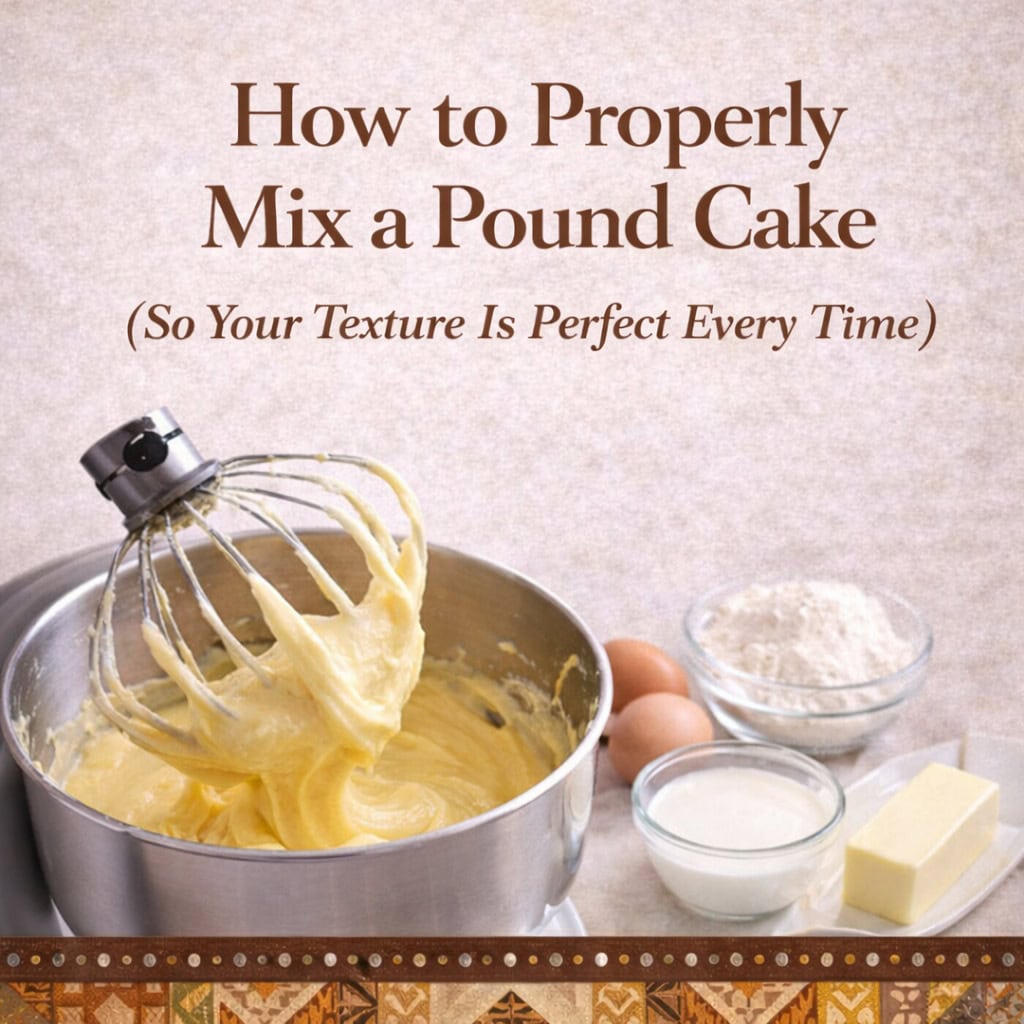
Signs Your Pound Cake Batter Is Mixed Correctly
Your batter should be:
- Thick but smooth
- Uniform in color
- Glossy and well-emulsified (blended/combined).
- Free of streaks or lumps
When poured into the pan, it should fall in thick ribbons, not clumps.
Proper mixing is the heart of a great pound cake. When you cream correctly, add the ingredients slowly, and mix just until combined, you create a cake that's tall, tender, moist, and buttery.
Master this process, and your pound cakes will never disappoint. 🍰🤎
Find all of our recipes here
Find all of our baking guides here
Tools I Use & Recommend
These are the exact tools I use to get consistent, bakery-quality pound cakes every time. Using the right equipment makes a BIG difference-especially when it comes to texture, bake time, and getting that perfect release.
- 12-cup Bundt Pan (Standard size pan for most pound cake recipes)
- 18-cup Bundt Pan (Needed for Mile High Pound Cake recipes)
- Stand Mixer or Hand Mixer
- Silicone Spatula
- Oven Thermometer
- Cake Keeper
- Measuring Cups and Measuring Spoons
👉🏾 "Shop all my favorite baking tools here
Enjoyed this post? Pin the photo below and save it for later 😊
Made my recipe? Share it in my Whip it like Butter Community!!
This community is a place to share pound cakes, ask baking questions, swap tips, get inspiration, and help each other become more confident bakers.
Angela says
Thank you so much for explaining exactly what should be done when trying to bake the perfect pound cake. Mine was dry the last time, but I'm getting better. Thanks again!
Ashley Frederick says
You're most welcome! I'm glad your cakes have gotten better. You're most welcome!
Mary K. says
Thanks for the tips , now to get the the cake without the cracking top. A smooth top is my challenge
Ashley Frederick says
Best of luck in your baking journey. The cracking top is actually part of pound cake character and is really delicious. However I do understand that it's not everyone's preference.
LadyVEE says
Good morning and thank you for your expertise. The flavor is always on point but I tend to have the line/gummy part on the bottom of my cakes.
Ashley Frederick says
Hi there! I hope this post gave you some tips to help prevent that issue in the future! Thank you!