
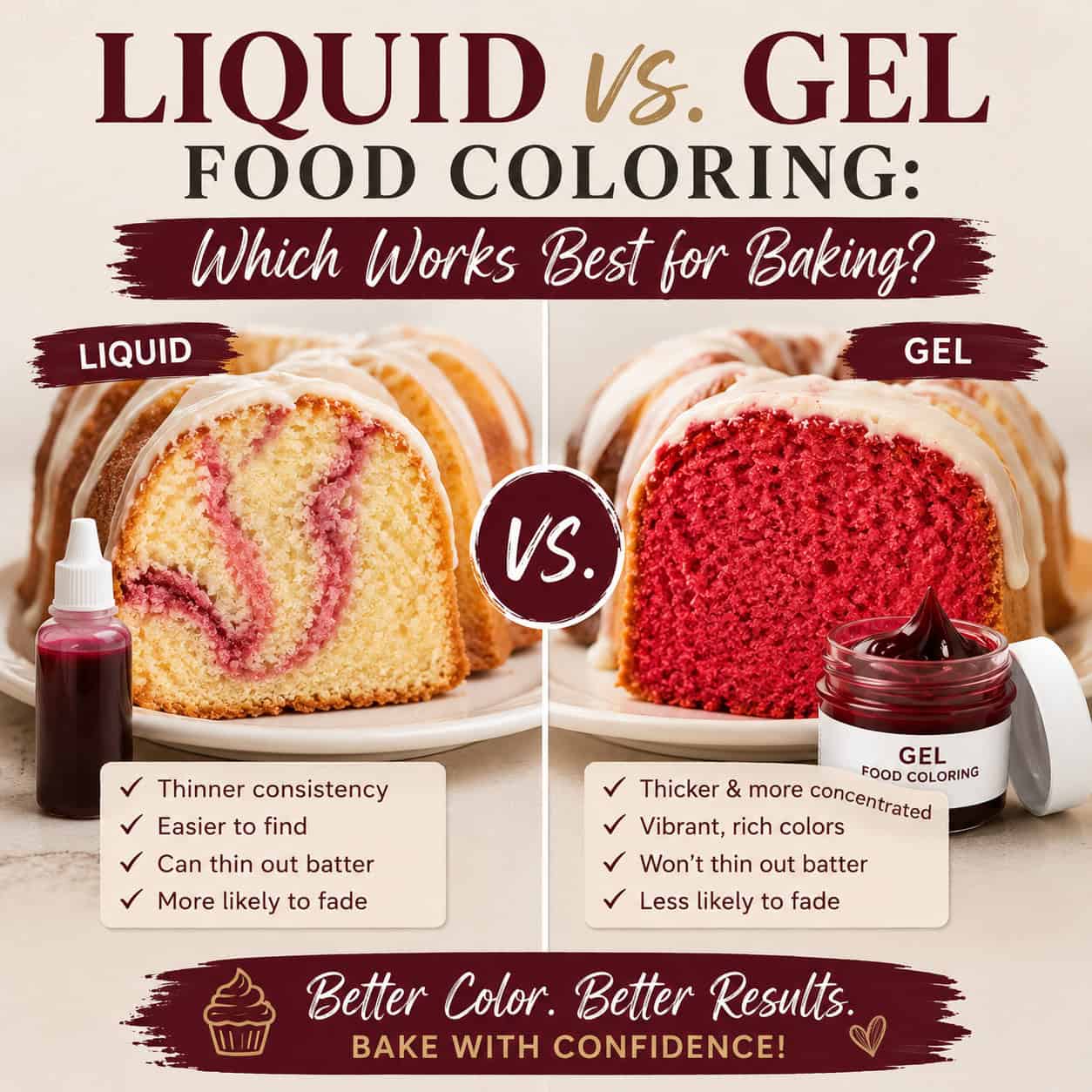
Liquid vs. gel food coloring - which works best for baking? Learn how each affects color, texture, and results, especially in cakes and pound cakes.
Have you ever dyed cake batter and thought, "Why is the color so light?" or "Why did my batter suddenly get thin?" - the issue probably wasn't your recipe. It was your food coloring.
Not all food coloring behaves the same in baking, and choosing between liquid vs. gel food coloring can make a huge difference in your cake's color, texture, and final outcome - especially in pound cakes, where structure matters.
Let's break down exactly how each type works, when to use them, and which one delivers the best results in your baking.
What Is Liquid Food Coloring?
Liquid food coloring is the most common type - the small bottles you find in most grocery stores.
Characteristics:
✔ Water-based
✔ Thin consistency
✔ Mild pigment concentration
✔ Easy to find and budget-friendly
Pros:
- Works well for light pastel shades
- Great for quick projects like frosting drizzle, glazes, or lightly tinted batters
- Beginner-friendly
Cons:
- Requires more drops to achieve bold color
- Adds extra liquid to your batter
- Can affect texture in delicate recipes like pound cakes and buttercreams
In dense batters especially, adding too much liquid coloring can slightly loosen structure and impact rise.
What Is Gel Food Coloring?
Gel food coloring is thicker, more concentrated, and designed specifically for baking and decorating.
Characteristics:
✔ Gel-based
✔ Highly pigmented
✔ Thick consistency
✔ A little goes a long way
Pros:
- Produces vibrant color with tiny amounts
- Won't thin batters or frostings
- Ideal for buttercreams and pound cakes
- Best choice for consistent, professional-looking results
Cons:
- Slightly more expensive (But absolutely worth it)
- Usually sold in baking or craft stores instead of grocery aisles. Can also be found on Amazon.
Liquid vs. Gel Food Coloring: Key Differences
| Feature | Liquid Coloring | Gel Coloring |
|---|---|---|
| Color strength | Light | Bold and vibrant |
| Amount needed | Large | Very small |
| Effect on batter | Can thin | No texture change |
| Best for | Pastels, glazes | Cakes, frostings, bold colors |
| Pound cake friendly | ⚠️ Sometimes | ✅ Always |
Which Is Better for Cakes - Especially Pound Cakes?
Hands down: gel food coloring.
Pound cakes rely on precise ratios of fat, sugar, eggs, and flour to achieve that tight but tender crumb. Adding extra liquid - even in small amounts - can:
❌ Weaken structure
❌ Affect rise
❌ Alter crumb texture
❌ Dilute and/or alter flavor
Gel coloring gives you:
✔ Strong color
✔ Zero texture disruption
✔ Cleaner crumb
✔ More predictable results
Does Gel Food Coloring Affect Flavor?
Not when properly used. Overuse, even with liquid food coloring, can definitely affect flavor. Excessive use can introduce a slightly bitter or artificial taste, so it's important to use just enough. Add it slowly to prevent adding too much.
How Much Gel Food Coloring Should You Use?
Start small - you can always add more.
General guideline:
🎨 1-2 drops for light shades
🎨 3-6 drops for bold colors
Always mix fully before deciding whether to add more. Color deepens slightly as batter rests. It is also best practice to follow the recipe regarding how much food coloring to use.
Can You Substitute Liquid for Gel (and Vice Versa)?
Yes - but adjust expectations.
If using liquid instead of gel:
- Expect to use more
- Watch batter consistency closely
- Avoid overmixing while trying to achieve color
If using gel instead of liquid:
- Build color gradually
- Mix thoroughly between additions
Gel Wins for Pound Cake Baking
If your goal is:
✔ Vibrant color
✔ Stable batter
✔ Professional-looking results
✔ No texture changes
Then gel food coloring is the clear winner, especially for pound cakes.
Liquid coloring still has its place - but when it comes to dependable baking results, gel gives you control, consistency, and confidence every time.
Frequently Asked Questions About Liquid vs. Gel Food Coloring
Does food coloring fade during baking?
Some fading can happen, especially with liquid coloring. Gel food coloring holds its color much better during baking and after cooling.
Why does my batter look dull even after adding color?
This usually happens when:
- You're using liquid coloring
- The batter is dark (chocolate, cocoa-based)
- You didn't add enough food coloring
Gel coloring solves this quickly.
How do I prevent streaking when using gel coloring?
Use a toothpick to add small amounts, then mix thoroughly. Scrape the bowl and fold gently to ensure even distribution.
Can I use gel food coloring in buttercream and frosting?
Absolutely - gel is ideal for buttercream, whipped frosting, cream cheese frosting, and glazes because it produces vibrant color without changing consistency.
Find all of my recipes here
Find all of my baking guides here
Tools I Use & Recommend
These are the exact tools I use to get consistent, bakery-quality pound cakes every time. Using the right equipment makes a BIG difference-especially when it comes to texture, bake time, and getting that perfect release.
- 12 cup Bundt Pan (Standard size pan for most pound cake recipes)
- 18 cup Bundt Pan (Needed for Mile High Pound Cake recipes)
- Stand Mixer or Hand Mixer
- Silicone Spatula
- Oven Thermometer
- Cake Keeper
- Measuring Cups and Measuring Spoons
👉🏾 "Shop all my favorite baking tools here
Enjoyed this post? Pin the photo below and save it for later 😊
Made my recipe? Share it in my Whip it like Butter Community!!
This community is a place to share pound cakes, ask baking questions, swap tips, get inspiration, and help each other become more confident bakers.
Leave a Reply