
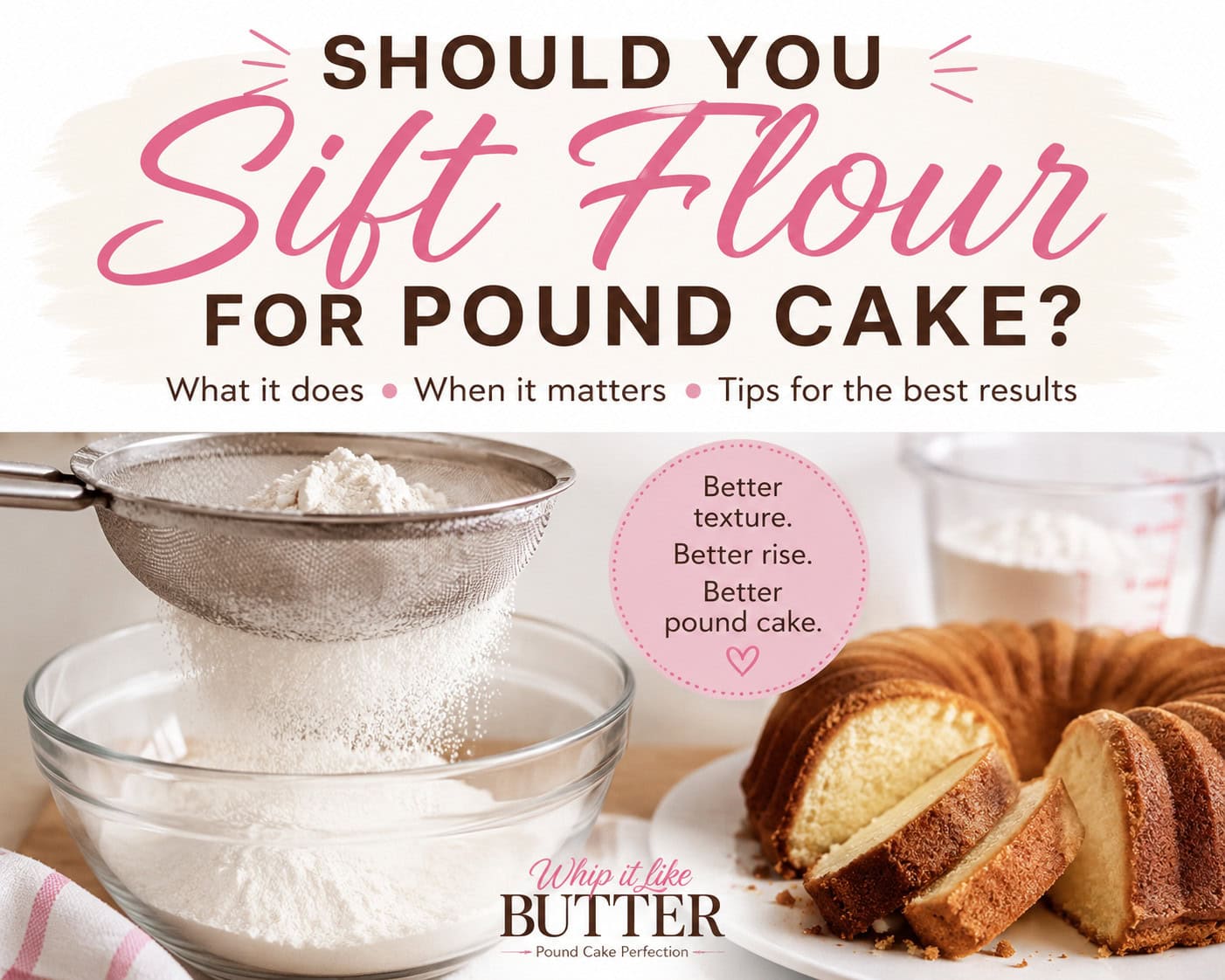
Learn whether you should sift flour for pound cake, why sifting matters, and how it can affect your cake's texture, rise, and final results.
If you've ever followed a pound cake recipe, you've probably noticed that some recipes call for sifted flour, while others don't mention sifting at all.
So, is it really necessary?
The answer is not always.
For pound cake, sifting flour isn't required-but there are situations where it can improve your results. Understanding when to sift and when you can skip this step will help you bake a better pound cake every time and to your liking.
Why Was Flour Traditionally Sifted?
Years ago, flour was more likely to contain small lumps or impurities after sitting on store shelves or in storage.
Sifting served two important purposes:
- It removed lumps and debris.
- It incorporated air into the flour, making it lighter and easier to mix.
Today's flour is much more refined than it used to be, so sifting isn't as essential as it once was.
Do You Need to Sift Flour for Pound Cake?
In most cases, no.
If you're using fresh, all-purpose flour or cake flour and measuring it correctly, you can usually skip the sifting step without affecting your finished cake.
However, you should still fluff the flour before measuring it. Flour naturally settles in the bag or container over time, becoming more compact. Loosening it with a spoon or whisk helps you measure more accurately and avoid adding too much flour.
When Should You Sift Flour?
Although it's often optional, there are times when sifting is a good idea.
Your Flour Has Lumps
Humidity can cause flour to develop clumps.
Sifting breaks apart those lumps so they don't end up in your batter.
You're Combining Dry Ingredients
If your recipe includes baking powder, baking soda, cocoa powder, spices, or powdered milk, sifting everything together helps distribute the ingredients evenly throughout the flour.
You're Using Cocoa Powder
Unsweetened cocoa powder tends to clump more than flour.
Sifting cocoa with the flour helps prevent pockets of dry cocoa in the finished cake.
You're Baking in a Humid Climate
If your pantry tends to be humid, flour is more likely to clump during storage. A quick sift can make mixing easier.
What Happens If You Don't Sift?
If your flour is fresh and lump-free, probably not much.
Most bakers won't notice a significant difference between sifted and unsifted flour in a traditional pound cake.
However, if the flour contains clumps, you may notice:
- Small pockets of dry flour
- Uneven mixing
- Streaks of flour in the batter
These issues are usually caused by lumps rather than the lack of sifting itself.
Is Fluffing the Same as Sifting?
No.
Although they serve similar purposes, they're not the same.
Fluffing flour means stirring it with a spoon or whisking before measuring. This loosens compacted flour and helps you measure accurately.
Sifting flour means passing it through a fine mesh sieve or flour sifter to remove lumps and add air.
For most homemade pound cakes, fluffing the flour before measuring is often enough.
Does Sifting Make Pound Cake Lighter?
Not by itself.
The light texture of a pound cake comes primarily from:
- Properly creaming the butter and sugar
- Measuring ingredients accurately
- Using room-temperature ingredients
- Avoiding overmixing
Sifting flour won't compensate for problems in those areas.
Think of sifting as a finishing touch rather than the secret to a light cake.
What About Cake Flour?
Cake flour is much finer than all-purpose flour and is less likely to develop lumps. It's generally optional unless your recipe specifically instructs you to do so. Some often prefer cake flour due to the tender texture.
Measuring Flour Correctly Matters More
If there's one step that's more important than sifting, it's measuring flour correctly.
Adding too much flour is one of the most common causes of dry, dense pound cakes.
For the best results:
- Fluff the flour with a spoon.
- Spoon the flour into your measuring cup.
- Level it off with the straight edge of a knife.
Avoid scooping the measuring cup directly into the flour bag, as this packs in extra flour and can throw off the recipe.
For the greatest accuracy, use a kitchen scale and measure by weight whenever your recipe provides gram measurements.
Frequently Asked Questions
Should I sift flour after measuring or before measuring?
It's always a good idea to follow the instructions provided by the recipe developer, but it really comes down to personal choice. If you are an inexperienced baker, you may want to follow the recipe as is until you develop your own flow. Most often bakers sift after measuring the flour.
Is a flour sifter better than a mesh sieve?
Both work well. A fine mesh sieve is versatile, easy to clean, and works for flour, cocoa powder, powdered sugar, and spices. This is a matter of preference as well.
Overall, for pound cake recipes... sifting flour is optional-not mandatory.
Fresh, lump-free flour that has been measured correctly will usually produce excellent results without an extra trip through the sifter.
If your flour has clumps or you're combining ingredients like cocoa powder, baking powder, or spices, sifting can help create a smoother, more evenly mixed batter.
In the end, accurate measuring, proper creaming, and avoiding overmixing will have a much bigger impact on your pound cake than whether or not you sift your flour.
Find all of my recipes here
Find all of my baking guides here
Tools I Use & Recommend
These are the exact tools I use to get consistent, bakery-quality pound cakes every time. Using the right equipment makes a BIG difference-especially when it comes to texture, bake time, and getting that perfect release.
- 12 cup Bundt Pan (Standard size pan for most pound cake recipes)
- 18 cup Bundt Pan (Needed for Mile High Pound Cake recipes)
- Stand Mixer or Hand Mixer
- Silicone Spatula
- Oven Thermometer
- Cake Keeper
- Measuring Cups and Measuring Spoons
👉🏾 "Shop all my favorite baking tools here
Enjoyed this post? Pin the photo below and save it for later 😊
Join the Whip it like Butter Community!!
This community is a place to share pound cakes, ask baking questions, swap tips, get inspiration, and help each other become more confident bakers.
https://community.raptive.com/whipitlikebutter?u=whipitlikebutter
Catherine Grasty says
Thank you, great advice. One puts a lot of effort in baking a poundcake and it should be a source of pride when finished. I enjoy baking so much and any tips that experienced bakers share helps me to be more confident. However, I still follow the recipe twice and check off the ingredients. I will continue reading your articles. Your wisdom is priceless!
Ashley Frederick says
Thank you so much Catherine! You're doing all the right things. May all your bakes be great!
Joyceb says
Thank you for clarifying the question before or after. I have sifted both ways, and l don’t recall any significant difference; so l will just sift after l measure. 👍🏽
Ashley Frederick says
Glad it was helpful!
DOROTHY Reid says
Thank you for providing this information. I know it will help a lot of bakers, including myself.
Ashley Frederick says
Thank you for the encouragement!! Much appreciated!