
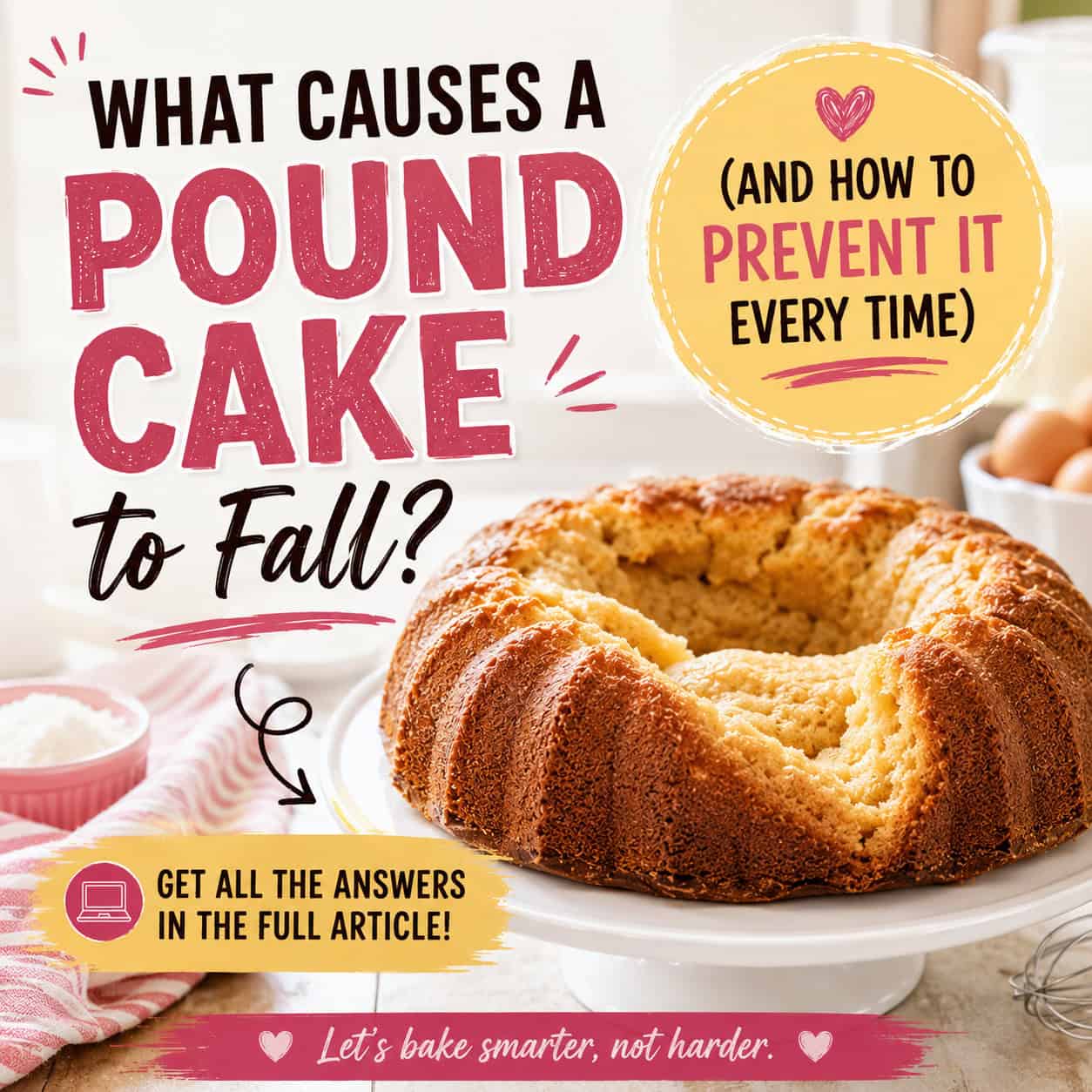
Wondering why your pound cake falls after baking? Learn the real causes and simple fixes for tall, tender, bakery-style results every time.
There's nothing more heartbreaking than pulling a beautiful pound cake out of the oven - only to watch it sink in the center minutes later. 😩 The crust looks perfect, the kitchen smells amazing… and then boom. Collapse.
The good news? A falling pound cake is almost always the result of a fixable baking issue, not bad luck. Once you understand what causes it, you can bake tall, stable, pound cakes with confidence.
Let's break it all down.
What Does It Mean When a Pound Cake Falls?
A falling pound cake usually means the structure wasn't strong enough to support itself once it cooled. While the outside set, the inside didn't finish baking properly - so when steam escaped and temperature dropped, the cake collapsed inward.
This typically shows up as:
- A sunken center
- A dense or gummy middle
- Uneven crumb texture
Now let's get into the most common causes - and how to fix each one.
1. Underbaking (The #1 Cause)
This is the most common reason pound cakes fall.
Pound cakes bake low and slow, and because they're dense and tall, the center takes longer to set. If the cake comes out too early, the structure hasn't fully formed - so when it cools, it sinks.
How to fix it:
✔ Bake until a skewer or toothpick inserted in the center comes out clean.
✔ Look for firm edges that pull slightly from the sides of the pan.
✔ Internal temp should be around 210°F.
✔ Let the top fully set before removing from the oven.
If your cake looks golden but jiggles in the center, it's not ready yet.
2. Too Much Leavening
Pound cakes don't need much leavening - most often times none at all, depending on the recipe. Too much baking powder or baking soda causes the cake to rise too quickly, then collapse once the air bubbles can't support the structure.
How to fix it:
✔ Measure leavening carefully - no heaping.
✔ Use only what the recipe calls for.
✔ Avoid substitutions unless you understand the chemistry.
In pound cakes, less is more when it comes to leavening.
3. Overmixing After Adding Eggs or Flour
Once eggs and flour go in, overmixing can incorporate too much air or overdevelop gluten, both of which weaken structure. That creates a cake that rises beautifully - then sinks.
How to fix it:
✔ Mix eggs just until incorporated.
✔ Fold in flour gently.
✔ Stop mixing as soon as the batter is smooth.
Creaming is where you build structure - folding is where you protect it.
4. Butter Too Soft or Melted
Butter that's too warm won't trap air properly during creaming. Instead of forming stable air pockets, it creates a loose batter that can't hold structure during baking.
How to fix it:
✔ Butter should be soft but cool (about 65°F).
✔ You should be able to press it, but not see oil or melting.
✔ Never melt butter for pound cake unless the recipe specifically calls for it.
Structure starts with properly creamed fat.
5. Opening the Oven Door Too Early
Opening the oven door during the first half of baking causes sudden heat loss, which can collapse the cake before the internal structure sets.
How to fix it:
✔ Avoid opening the oven during the first 45-60 minutes of baking.
✔ Use your oven light instead.
✔ Rotate (if needed) only after the top has set.
Once structure forms, airflow matters less - but early interruption can ruin everything.
6. Incorrect Oven Temperature
If your oven runs too hot, the outside sets too quickly while the inside stays underbaked - leading to collapse. If it runs too cool, the cake rises slowly and may never develop proper structure.
How to fix it:
✔ Use an oven thermometer.
✔ Bake pound cakes at 325°F. This is a sweet spot temperature.
✔ Adjust rack placement to center oven.
Low and slow is the pound cake golden rule.
7. Too Much Sugar or Liquid
Sugar tenderizes crumb - but too much weakens structure. Excess liquid can also thin batter, making it harder to support itself during baking.
How to fix it:
✔ Follow ratios carefully.
✔ Don't eyeball liquids.
✔ Measure sugar properly (using a dry measuring cup).
Balance is everything in pound cake baking.
Why Pound Cakes Fall After Cooling
If your cake looks perfect in the oven but sinks afterward, it usually means:
- The center wasn't fully baked.
- Steam escaped before structure set.
- Internal moisture collapsed the crumb.
This is why resting the cake in the pan for 10-15 minutes before removing it from the pan is so important - it allows structure to stabilize.
How to Prevent Pound Cakes from Falling (Quick Checklist)
✔ Bake fully - test the center.
✔ Cream butter and sugar properly.
✔ Use correct leavening amounts.
✔ Avoid overmixing or undermixing.
✔ Keep oven door closed early.
✔ Use room-temperature ingredients.
✔ Bake at 325°F.
✔ Let cake rest before removing it from the pan.
Follow these and falling cakes become a thing of the past.
A fallen pound cake isn't failure - it's feedback. Once you understand the baking science behind structure, rise, and moisture, you'll start producing consistently tall, beautifully textured cakes every time.
And remember: most pound cake problems don't come from bad recipes - they come from an issue with technique timing and temperature control. Master those, and watch how your results improve dramatically.
Find all of our recipes here
Find all of our baking guides here
Tools I Use & Recommend
These are the exact tools I use to get consistent, bakery-quality pound cakes every time. Using the right equipment makes a BIG difference-especially when it comes to texture, bake time, and getting that perfect release.
- 12 cup Bundt Pan (Standard size pan for most pound cake recipes)
- 18 cup Bundt Pan (Needed for Mile High Pound Cake recipes)
- Stand Mixer or Hand Mixer
- Silicone Spatula
- Oven Thermometer
- Cake Keeper
- Measuring Cups and Measuring Spoons
👉🏾 "Shop all my favorite baking tools here
Enjoyed this post? Pin the photo below and save it for later 😊
Join my Whip it like Butter Community!!
This community is a place to share pound cakes, ask baking questions, swap tips, get inspiration, and help each other become more confident bakers.
Chiquita Kingcade~Herndon says
Thank you for taking the time to share all tips and tools to help strengthens our baking skills.. am looking forward to participating in the bake brown contest..👋🏽😊
Ashley Frederick says
My pleasure! Can't wait to see your cake.