
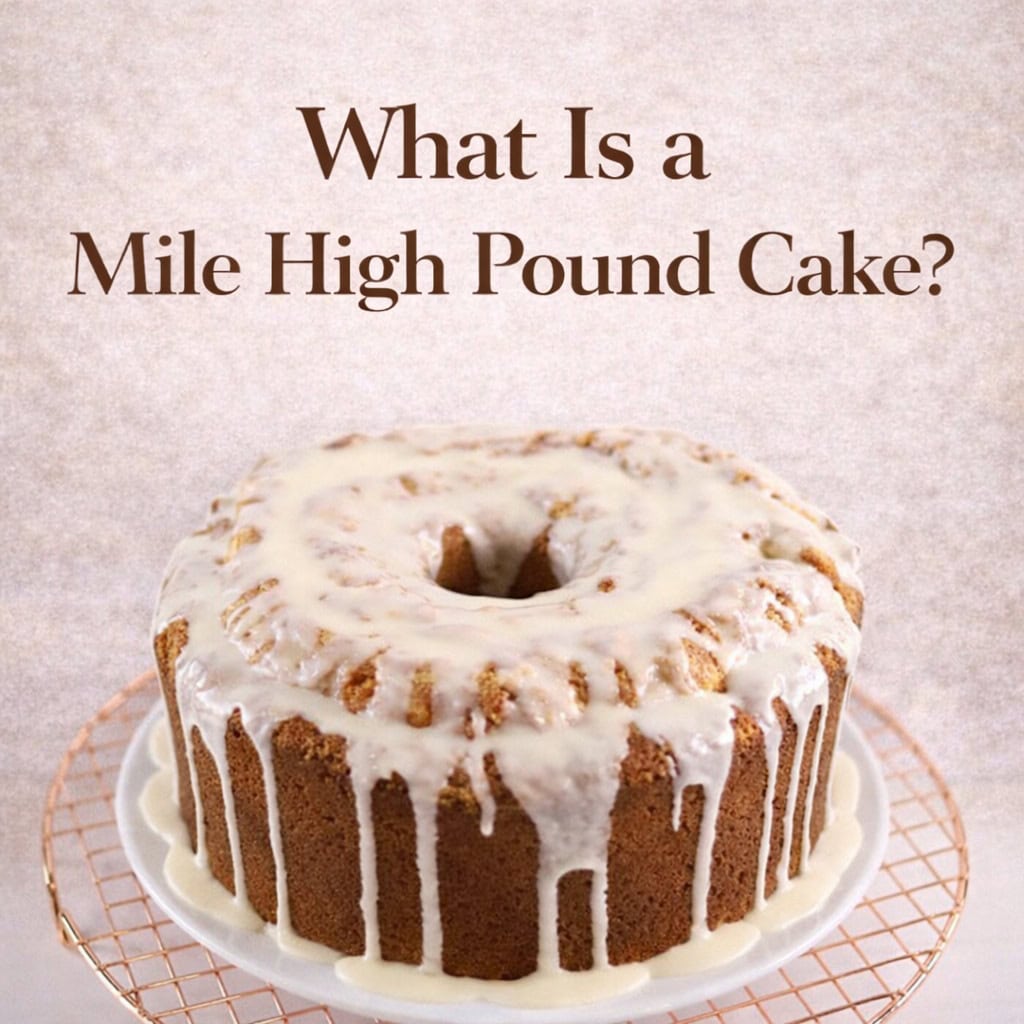
If you've ever seen a towering, golden pound cake and wondered, "How does it get so high?" - you're in the right place. The Mile High Pound Cake isn't just any pound cake; it's one of the most impressive types of pound cakes you can bake.
Let's break down what makes a Mile High Pound Cake so special, why it rises taller than most, and how you can make one that's moist, tender, and full of buttery flavor.
What Makes a Pound Cake "Mile High" and How It Differs From a Regular Pound Cake
A Mile High Pound Cake is taller and is prepared with more ingredients than traditional pound cakes. My formula for a standard Mile High Pound Cake includes the following:
🤎 4 cups of flour
🤎 4 cups of sugar
🤎 4 sticks of butter (2 cups)
🤎 10 eggs
From there, I may add other ingredients like buttermilk (about 1⅓ cups) depending on the flavor or texture I'm going for - but this base is always my starting point.
Other bakers may use 8 eggs, adjust the flour, or change the liquid ratios, and that's perfectly fine. With time and practice, you'll develop your own go-to formula too. What matters most is having a solid foundation you can build on with confidence.
The difference is in the science behind the bake, not just the recipe. Attention to detail is everything.
Why Bakers Love Mile High Pound Cake
- Visual impact: A towering pound cake looks stunning on any table.
- Perfect crumb: Soft, tender, and moist.
- Flavor consistency: Rich buttery flavor spreads through the cake evenly.
- Versatility: Great plain, glazed or just dusted with powdered sugar.
Tips for Achieving the Perfect Mile High Pound Cake
- Cream butter and sugar thoroughly: This process traps air that expands in the oven, giving the cake lift. Aim for a pale, fluffy texture.
- Measure ingredients carefully: Too much flour or liquid can affect rise.
- Precise mixing and folding: Overmixing or undermixing can prevent proper rise or cause the cake to collapse.
- Use the right pan: A 18 cup Bundt pan is needed for a Mile High Pound Cake. Smaller pans won't hold all the batter, which means you'll need to bake the extra in a separate pan.
- Avoid early oven opening: Let your cake rise undisturbed for even baking. Refrain from opening the oven prior to the last 15 minutes of the baking process.
- Low and slow baking: Baking at a moderate temperature allows the cake to set while continuing to rise without cracking or sinking.
- Check for doneness: A toothpick should come out clean or with minimal crumbs from the center.
How to Convert a Regular Pound Cake to a Mile High Pound Cake
When converting a regular pound cake into a Mile High Pound Cake, it's best to start with a tested Mile High base recipe and customize it with your desired flavors. This approach produces much more reliable results than simply doubling a standard recipe.
For example, many traditional pound cake recipes use:
- 1 cup of liquid (such as sour cream, buttermilk, or heavy whipping cream), or
- 8 ounces of cream cheese
A typical Mile High version increases those amounts to approximately:
- 1⅓ cups (or more) of liquid, or
- 12 ounces of cream cheese, depending on the recipe.
The key is to keep all of the ingredients in the proper proportion so the larger cake bakes evenly and maintains the same rich flavor and tender crumb.
Why You Shouldn't Simply Double a Regular Recipe
Most traditional pound cake recipes produce about 10 cups of batter, which is perfect for a standard Bundt pan.
If you double the recipe, you'll end up with approximately 20 cups of batter-more than an 18-cup Mile High Bundt pan is designed to hold. Overfilling the pan can lead to batter overflowing in the oven, uneven baking, and a cake that doesn't rise or bake properly.
Starting with a Mile High base recipe eliminates the guesswork and ensures your ingredient ratios are already designed for an 18-cup Bundt pan.
How Long Should You Bake a Mile High Pound Cake?
Because Mile High Pound Cakes contain more batter than a traditional pound cake, they naturally require a longer baking time.
As a general guideline, I bake my Mile High Pound Cakes for 1 hour and 30 minutes, then continue baking longer if needed.
Rather than relying strictly on the clock, look for these signs that your cake is done:
- A toothpick inserted near the center comes out clean or with just a few moist crumbs.
- The top is golden brown and set.
- The cake springs back lightly when touched in the center.
Every oven bakes differently, so your exact baking time may vary depending on your oven, the type of pan you're using, and the flavor of the cake. Some recipes may need a few extra minutes to bake completely.
My tip: Start checking your cake around the 1 hour and 30 minute mark, but don't remove it until the toothpick comes out clean or with only a few moist crumbs. A few moist crumbs are perfect-wet batter means the cake needs more time in the oven.
A Mile High Pound Cake is a showstopper - both in appearance and taste. It's all about mastering technique, respecting the ingredients, and taking your time during the creaming and baking process. Once you master this cake, it will become a favorite for holidays, special occasions, or any time you want to impress your friends and family.
Happy baking! I hope your cake comes out great!
Find all of our recipes here
Find all of our baking guides here
Tools I Use & Recommend
These are the exact tools I use to get consistent, bakery-quality pound cakes every time. Using the right equipment makes a BIG difference-especially when it comes to texture, bake time, and getting that perfect release.
- 18 cup Bundt Pan (Needed for Mile High Pound Cake recipes)
- Stand Mixer or Hand Mixer
- Silicone Spatula
- Oven Thermometer
- Cake Keeper
- Measuring Cups and Measuring Spoons
👉🏾 "Shop all my favorite baking tools here
Enjoyed this post? Pin the photo below and save it for later 😊
Made my recipe? Share it in my Whip it like Butter Community!!
This community is a place to share pound cakes, ask baking questions, swap tips, get inspiration, and help each other become more confident bakers.
Leave a Reply